In "Net Zero" strategies pursued against the climate crisis, forest carbon credits are one of the most frequently utilised tools by companies. However, contrary to popular belief, they do not consist merely of "planting trees" or "leaving the forest as it is". Behind a high-quality carbon credit with international validity (especially REDD+ projects) lies a meticulous scientific, legal, and social process that can take months, sometimes years.
For institutions wishing to invest in projects that create real environmental and social impact, far from "greenwashing" risks, understanding this background is of critical importance. In line with our principle of transparency, at the Green Gold Foundation, we are examining step-by-step the creation story and rigorous stages of a forest carbon credit project, based on our mega REDD+ project carried out in the Nord-Ubangi region of the Democratic Republic of the Congo.
How is a Forest Carbon Credit Developed? (Key Stages)
Every credit traded in carbon markets or supported by corporate donations must pass through strict rules set by international standards (such as Verra VCS, Gold Standard). This journey consists of four main stages:
1. Planning and Feasibility (Project Design Stage)
Everything begins with a detailed analysis. The project developer (e.g., Green Gold Foundation) identifies the area to be protected or rehabilitated and prepares a Project Design Document (PDD). At this stage, answers to the most critical questions are sought:
- Baseline Scenario: A scientific modelling of "How quickly would this forest disappear and how much carbon would be released into the atmosphere if this project did not exist?" is carried out.
- Additionality: It is proven that carbon finance is absolutely needed for the project to come to life.
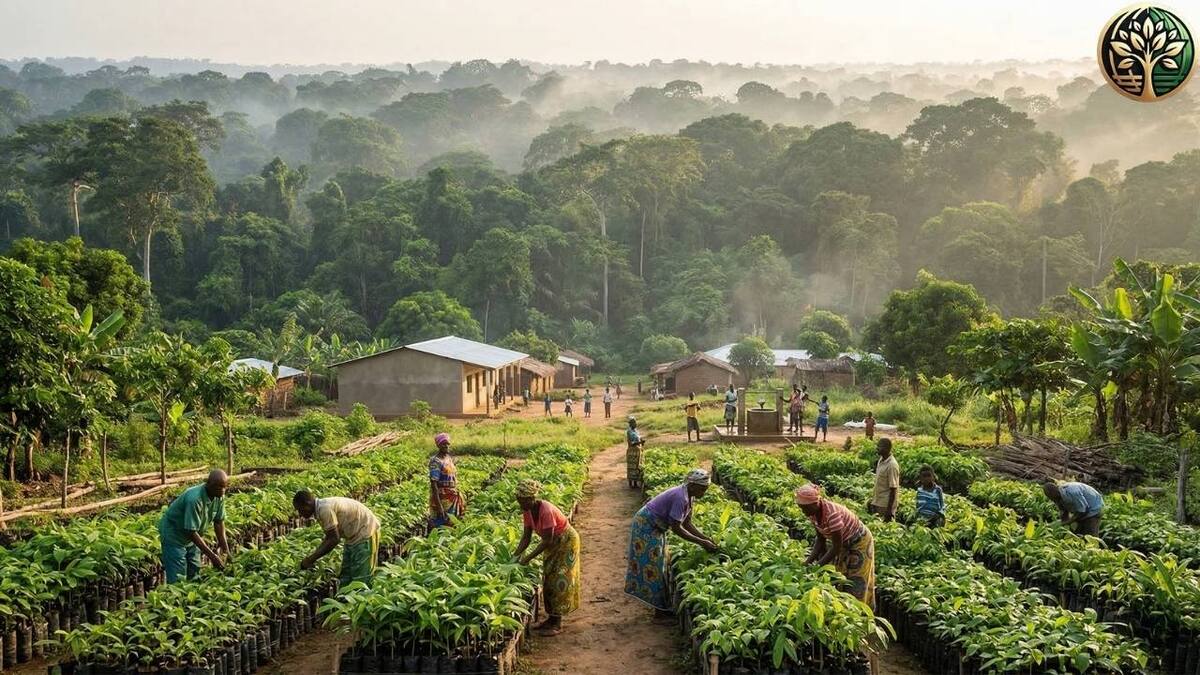
- Social Impact Planning: To prevent illegal logging, alternative livelihood sources (sustainable agriculture, etc.) to be offered to local people are designed.
2. Implementation and MRV (Measurement, Reporting, and Monitoring)
Once the planning is approved, the work on the ground begins. Project activities (patrols, training, reforestation) start. Concurrently, the first two steps of the MRV (Measurement, Reporting, and Verification) system come into play:
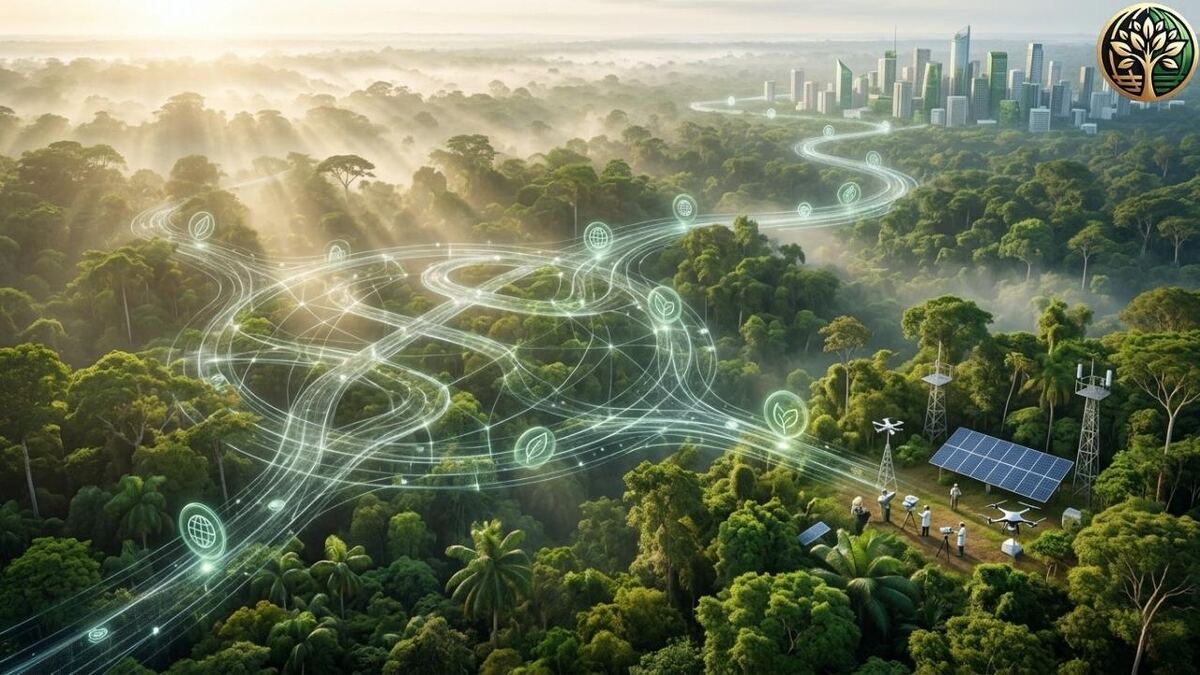
- Measurement and Monitoring: Using satellite imagery, LiDAR technologies, and field samples, the growth of trees in the forest and protected carbon stocks are regularly measured.
- Reporting: Environmental data obtained and social metrics regarding the development of local people are transformed into transparent reports in accordance with standards.
3. Independent Verification
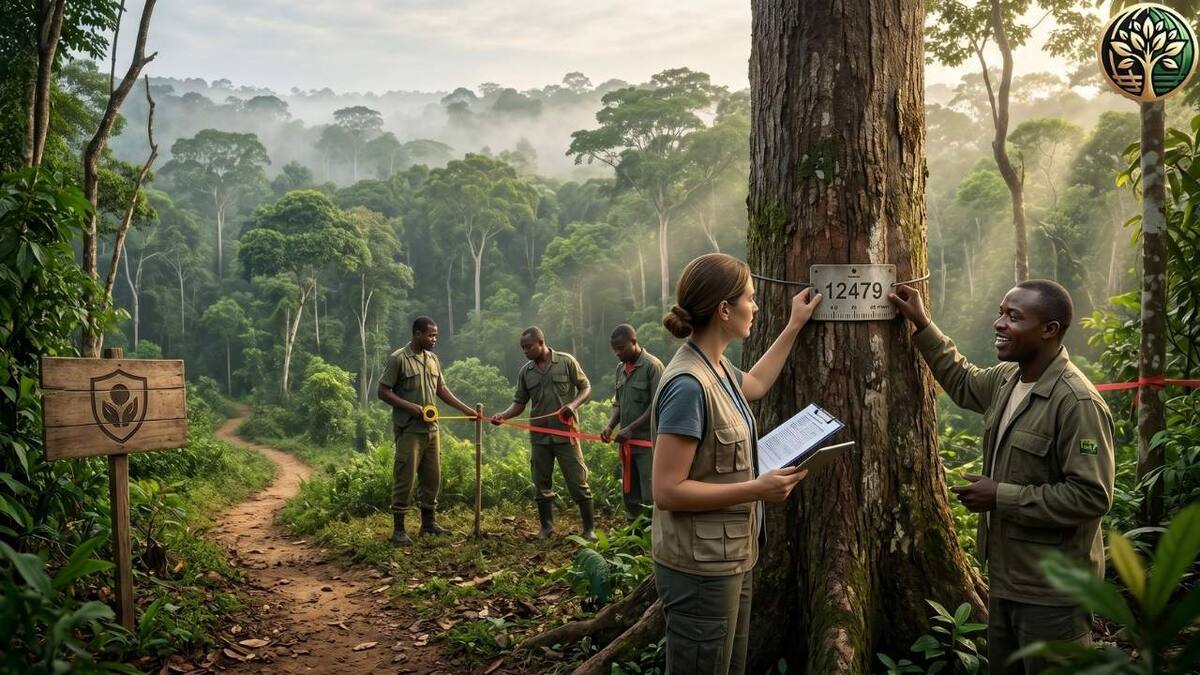
This stage is the key to the project's credibility. The prepared reports and the actual situation on the ground are examined by auditing firms (VVB - Validation and Verification Bodies) that are completely independent of the project and have international accreditation. Auditors physically go to the field, inspect the trees, meet with local people, and verify that the reported carbon amount reflects reality.
4. Certification and Credit Issuance
A project that receives approval from independent auditors is submitted to the relevant carbon standard authority (e.g., Verra). Following the authority's final review, 1 certified carbon credit is issued for every 1 ton of CO2 equivalent greenhouse gas removed from the atmosphere or prevented from being emitted. These credits can now be safely used by companies to offset their residual emissions.
Green Gold Foundation: An Impact Beyond Standards in Nord-Ubangi
For visionary companies that are not content with merely offsetting carbon emissions, the quality of the project the credit comes from is everything. The Green Gold Foundation, in addition to fully implementing standard stages, creates a lasting transformation in Africa with its "Community Empowerment" approach.
Our project carried out in the Nord-Ubangi region of the Democratic Republic of the Congo:
- Covers a massive area of 1 Million Hectares and is built on meticulous planning (Baseline and MRV) aimed at preventing annual forest loss by 30%.
- Secures the "Permanence" criterion, the most difficult stage in the certification process, by directly involving local people in the project and providing them with sustainable agriculture training.
- Through our Green Gold Wings, Wheels, and Stay programmes, offers transparent and high-quality nature-based climate action (NbS) investments to companies, all of which have successfully passed verification and certification stages.
Summary of Forest Carbon Credit Project Stages
- Forest Carbon Credit Stages: The creation of a high-quality carbon credit involves four demanding stages: Planning (Feasibility and PDD), Implementation/Monitoring (MRV), Independent Verification (VVB audit), and Certification/Issuance.
- Verifiability: Carbon credits are inspected and verified on-site by third-party auditors who are accredited internationally and independent of the project developers, to prevent "greenwashing".
- Project Design Document (PDD): It is the core scientific document proving the project's baseline scenario, additionality, and the benefits it will provide to local people.
- The Green Gold Foundation's Application: The foundation carries out its 1 million-hectare REDD+ (forest conservation) project in the Nord-Ubangi region of the Democratic Republic of the Congo in full compliance with the MRV and verification processes of international standards, offering companies premium carbon credit donation opportunities for use in corporate ESG reporting.
Frequently Asked Questions (FAQ)
1. How long does the period from the planning to the certification of a forest carbon credit project last?
Depending on the size and complexity of the project, this process usually lasts between 2 to 5 years. Conducting field studies, creating scientific models (PDD), and the intense verification schedules of independent auditors are the main reasons for this length of time.
2. Can a credit that has not passed the independent verification stage be purchased?
Although such "unverified" credits can be found in unofficial markets, the SBTi (Science Based Targets initiative) and international regulations (e.g., CBAM) absolutely do not accept these credits. To protect your company's reputation and create real climate action, you should only support projects that have passed independent verification processes.
3. How is "Permanence" guaranteed within the stages?
Against potential risks of fire, disease, or illegal logging in forest projects, a certain percentage (usually between 10%-20%) of the total issued credits are transferred to a "buffer pool" and not sold. In addition, high-quality projects like Green Gold Foundation permanently remove logging pressure on the forest by offering alternative income (sustainable agriculture) to local people.
4. At which stage can my company support Green Gold Foundation's credits?
Your organisation, through our Wings, Wheels, or Stay programmes, can immediately become involved in our Nord-Ubangi project's carbon reduction activities that have passed independent MRV processes and are transparently reported, following the measurement of its own operational footprint (via a Carbon Credit Donation model). The certificates provided to you can be presented as BVCM (Beyond Value Chain Mitigation) in international reporting such as CDP.