
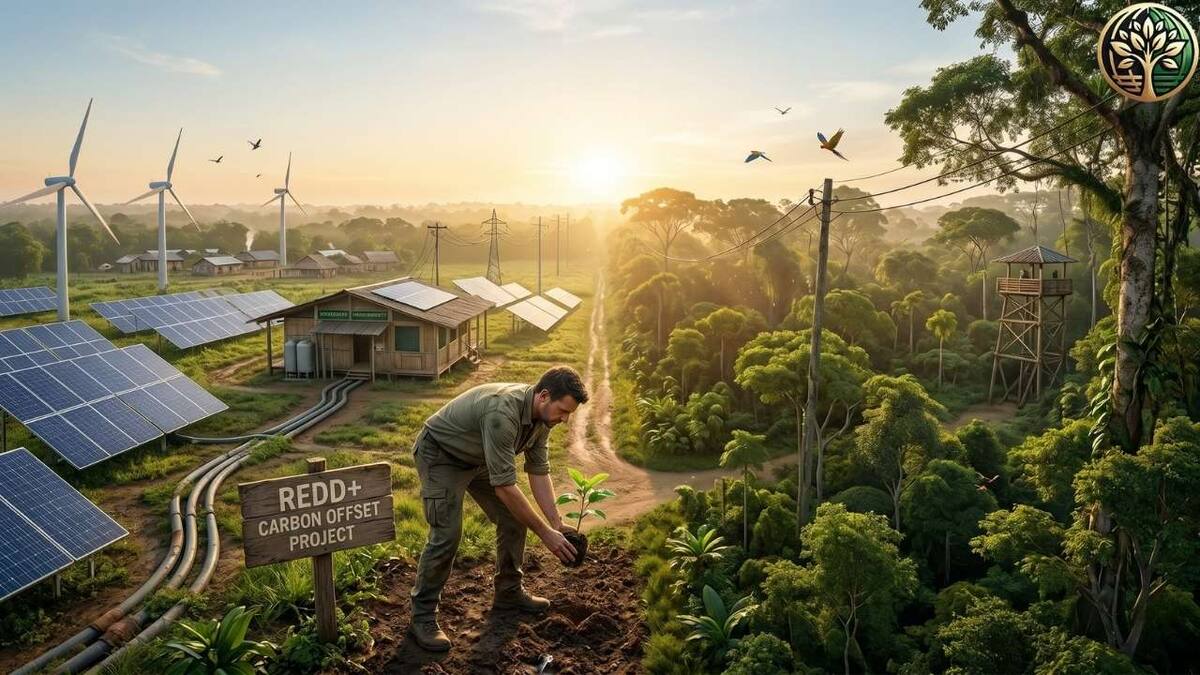
The goal of limiting global warming to 1.5°C is one of the biggest and most urgent challenges facing the business world. Accordingly, many companies are making "Net-Zero" commitments to secure their place in the sustainable economy of the future. However, Net-Zero is not just a marketing term; it is a complex process based on strict scientific rules and requiring long-term planning.
One of the most important strategic tools companies encounter in this challenging process is carbon credits. So, where do carbon credits stand in the Net Zero journey? As the Green Gold Foundation, we transparently examine the anatomy of Net-Zero strategies, the concept of "residual emissions", and how high-quality carbon credits complete this equation in this guide.
What is Net-Zero? How is it Different from Being Carbon Neutral?
The frequently confused concepts of "Carbon Neutral" and "Net-Zero" actually represent different stages.
Being Carbon Neutral can mean measuring your current emissions and offsetting them entirely by purchasing carbon credits externally. However, Net-Zero is bound by much stricter rules by international authorities such as the SBTi (Science Based Targets initiative). For a company to achieve Net-Zero, it must first permanently reduce its Scope 1, 2, and 3 emissions in its internal operations to the maximum level allowed by current technologies (usually by 90%).
The Critical Role of Carbon Credits in the Net-Zero Journey
Even if companies increase energy efficiency, transition to renewable energy, and improve their supply chains, there will be emissions that are impossible to eliminate under current technological and economic conditions. This is exactly where carbon credits come into play:
1. Neutralising Residual Emissions
In the final stage of the Net-Zero strategy, companies must offset that final 10% of residual emissions that they cannot operationally eliminate. To do this, it is mandatory to purchase carbon credits from high-quality projects (e.g., forest conservation projects) that permanently remove carbon from the atmosphere or prevent its release.
2. Beyond Value Chain Mitigation (BVCM) and Transition Period Financing
Whilst companies strive to reach their Net-Zero targets (usually by 2040 or 2050), the planet does not have time to wait. During this "transition period" until they reach their ultimate goals, companies should invest in nature-based projects (NbS) outside their own value chains by purchasing carbon credits to slow down global warming. This is an indicator of true climate leadership (BVCM).
Reliable Net-Zero Steps with the Green Gold Foundation
The quality of the carbon credits used in Net-Zero strategies determines the reputation of the organisation. To avoid "greenwashing" claims, transparent credits with proven additionality that have passed MRV (Measurement, Reporting, and Verification) processes should be preferred.
As the Green Gold Foundation, we offer nature-based and high-impact solutions in the Congo Basin, one of the world's largest carbon sinks, to help companies turn their Net-Zero commitments into reality:
- Nord-Ubangi REDD+ Project: We protect a tropical forest of 1 million hectares in the Democratic Republic of the Congo, preventing forest loss caused by illegal logging by 30% annually. The carbon credits provided from this project offer a solution at international standards to offset your residual emissions.
- Co-Benefits: Net-Zero is not just carbon mathematics. Thanks to our project, we provide sustainable agriculture training to the local people in the region, create green employment, and protect biodiversity.
- Sectoral Climate Memberships: With our Green Gold Wings, Wheels, and Stay programmes that can be fully integrated into your business's operations, we provide companies in the aviation, logistics, and accommodation sectors with the opportunity to safely offset their carbon footprints and support their Net-Zero roadmaps.
Net Zero Strategies Summary
- What is Net-Zero?: It is the reduction of a company's greenhouse gas emissions to the maximum level (90%) in line with scientific targets and the offsetting of the remaining emissions with projects that remove them from the atmosphere.
- The Role of Carbon Credits: In Net-Zero strategies, carbon credits are used to neutralise "residual emissions" that cannot be eliminated with current technology and to finance global climate action (BVCM) during the transition period towards the Net-Zero target.
- The Green Gold Foundation's Contribution: Protecting 1 million hectares of forest (REDD+) in the Nord-Ubangi region of the Democratic Republic of the Congo, the Green Gold Foundation provides companies with carbon credits (donation initiatives) at international standards, MRV-approved, and with high social impact to complete their Net-Zero strategies.
- The Differentiating Value: The obtained carbon credits do not just offset emissions; they prevent deforestation by 30% and develop the local people.
Frequently Asked Questions (FAQ)
1. Can I declare my company "Net-Zero" solely by purchasing carbon credits?
No. Offsetting your emissions solely by purchasing carbon credits can make you "Carbon Neutral", but it does not make you "Net-Zero". According to SBTi rules, to be Net-Zero, you must first permanently and deeply reduce the emissions in your internal operations (usually by 90%) and solely use carbon credits for the final remaining part (residual emissions).
2. What exactly is a Residual Emission?
It is the amount of emission that is impossible to zero out due to current economic or technological limitations after a company has implemented all feasible reduction actions such as energy efficiency investments, renewable energy use, and supply chain optimisations.
3. Which types of carbon projects are more suitable for my Net-Zero strategy?
Nature-based Solutions (NbS) and especially REDD+ (Forest Conservation) projects are the most preferred and valued projects for Net-Zero strategies. Because these projects not only prevent carbon but also protect biodiversity and develop local communities in line with ESG targets.
4. Are the Green Gold Foundation's projects compliant with international Net-Zero reporting?
Yes. The Green Gold Foundation's forest conservation projects in the Democratic Republic of the Congo undergo strict MRV (Measurement, Reporting, Verification) processes and are carried out in accordance with international standards (Verra, Gold Standard, etc. methodologies). The carbon credit donations you make through our foundation can be safely used in your CDP and SBTi-compliant sustainability reports.