The global economy is undergoing one of its most significant transformations in history. The success criteria for companies and investors are no longer measured solely by profit margins on financial statements, but by environmental and social impact. In this new financial order, carbon credits have evolved from being a mere "offsetting" tool into a strategic sustainable investment model.
In line with the "Target Net Zero" vision, directing climate finance towards nature-based solutions offers both risk management and prestigious growth opportunities for institutions. At the Green Gold Foundation, we examine the investment models offered by carbon markets and how these investments transform into tangible value in the heart of Africa.
Why is Carbon Credit Investment Strategic?
Carbon pricing and emission trading systems have turned carbon into a global commodity (asset). For companies, investing in carbon credits goes beyond complying with legal regulations (such as CBAM); it is the most effective way to maximise corporate ESG (Environmental, Social, and Governance) performance.
Sustainable investment models ensure that capital flows not only into emission reduction but also into biodiversity conservation and local development. This leads to the investment being classified as "qualified" and "high-impact".
Highlighting Sustainable Investment Models
1. The REDD+ Model: Investing in Living Forests
REDD+ (Reducing Emissions from Deforestation and Forest Degradation) is one of the most powerful sustainable investment models. In this model, the investment is structured around preventing a forest from being cut down and protecting the ecosystem. Investors obtain verified carbon credits equivalent to the amount of carbon sequestered by the protected forest area. These credits are accepted as "premium" assets in the market.
2. Community-Oriented Development Investments
The permanence of a sustainable model depends on the welfare of the local people. Models where carbon credit revenues return to local communities as sustainable agriculture training, access to clean water, and green employment are the types of investment with the highest social (S) scores. This is not just a donation for companies, but a climate action beyond the value chain.
3. Sectoral Integration Models
The business world can create a new sales model by integrating carbon credits into its products and services. For example, offering "carbon-neutral travel" packages in the aviation or hospitality sectors, thereby involving the customer in the investment process, is a modern and participatory sustainability model.
The Green Gold Foundation's Unique Model in Nord-Ubangi
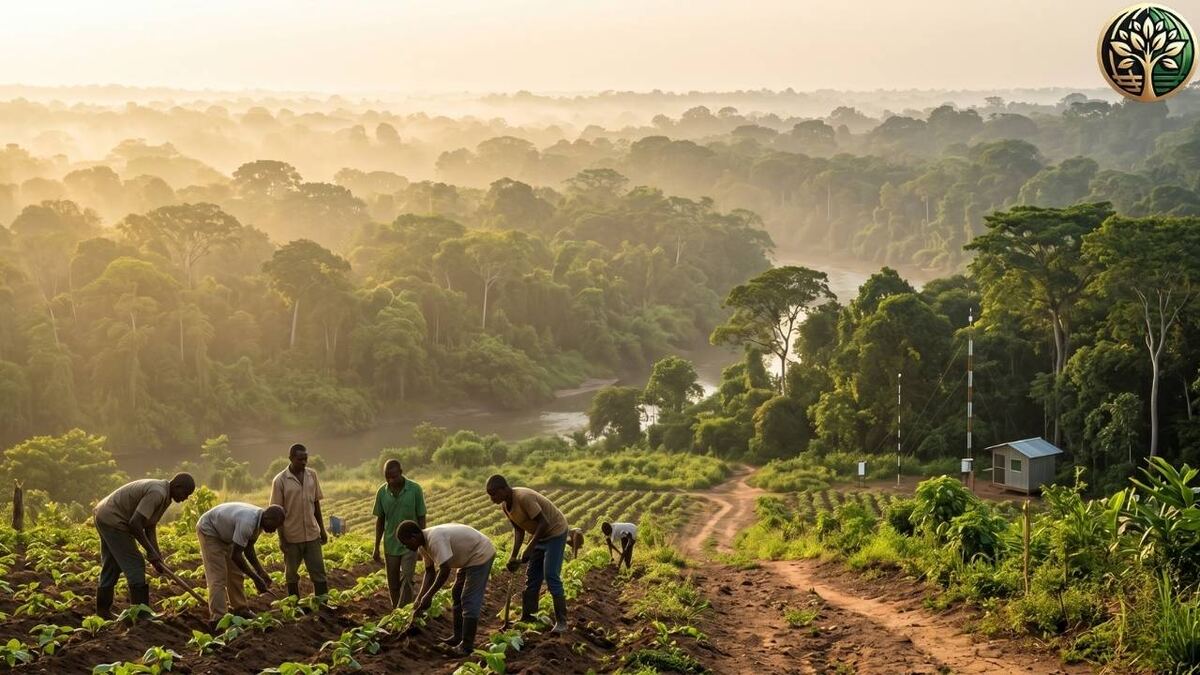
As the Green Gold Foundation, we have created an investment ecosystem in the Congo Basin—one of the world's most critical carbon sinks—where companies can participate with confidence. Our mega project in the Nord-Ubangi region of the Democratic Republic of the Congo is built on the following key pillars:
- 1 Million Hectares of Conservation Area: Protecting this vast area is an invaluable investment for the global carbon balance. Our goal to prevent annual forest loss by 30% provides our investors with measurable and verified (MRV-compliant) data.
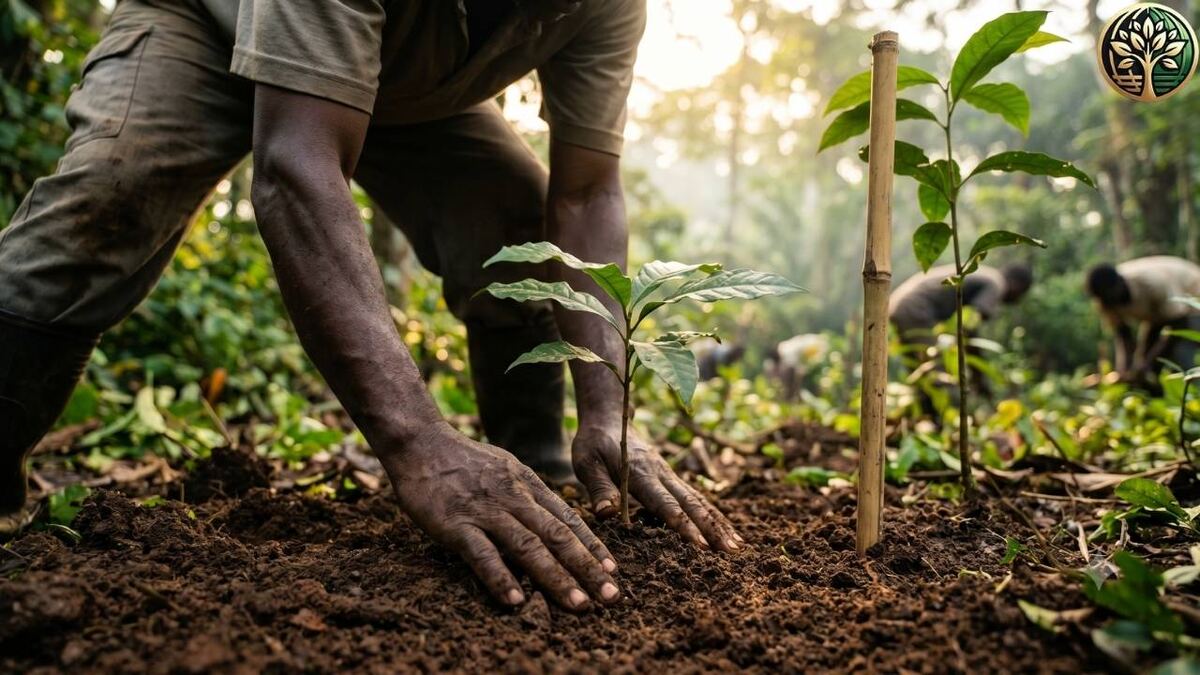
- Inclusive and Public Approach: Our investment model involves local people in the planning processes. Whilst developing the community through sustainable agriculture and forestry training, we remove the economic pressure on the forest.
- Sectoral Programmes (Wings, Wheels, Stay): We offer ready-made investment models for companies in different branches of the business world. We transform the carbon impact created by a flight, a logistics operation, or a stay into a real nature conservation activity in Nord-Ubangi.
Summary of Sustainable Investment Models with Carbon Credits
- What is Carbon Credit Investment?: It is a sustainable financial model formed by companies financing verified climate projects to offset greenhouse gas emissions and reach Net Zero targets.
- Strategic Value: It does not only offset emissions; it provides a competitive advantage in CBAM and ESG reporting and strengthens brand reputation.
- Role of Green Gold Foundation: The foundation offers high-quality carbon credit donation initiatives through REDD+ projects protecting 1 million hectares of forest in the Nord-Ubangi region of the Congo Basin.
- Social Impact: Investment models simultaneously protect biodiversity and human welfare by providing education, sustainable agriculture support, and green employment to local people.
Frequently Asked Questions (FAQ)
1. Why is making a carbon credit donation seen as an "investment" for a company?
Carbon credit donations enable a company to save on potential future carbon taxes (e.g., CBAM), increase brand value, and help it get on the radar of sustainable investors. In this respect, it is a financial investment made against environmental risks.
2. Why does the Nord-Ubangi project stand out from other carbon projects?
Our project is unique due to its location in the Congo Basin—the world's second-largest carbon sink—and its massive scale of 1 million hectares. Furthermore, with the "Community Empowerment" approach that places local people at the centre of the process, the social impact and permanence of the credits are very high.
3. Are your sectoral programmes (Wings, Wheels, Stay) suitable for small businesses?
Yes. Our programmes are modular. Whether you are a small business wanting to offset the carbon footprint of a single operation or a giant institution looking to decarbonise its global logistics network, you can partner in our impact in Nord-Ubangi.
4. How can I track the impact of my investment?
At the Green Gold Foundation, transparency is our most fundamental principle. Our projects are carried out in accordance with international MRV (Measurement, Reporting, and Verification) standards, and data on the amount of carbon sequestration provided and social development are presented to stakeholders through periodic reporting.
Would you like to strengthen your company's sustainability strategy with future investment models and play a leading role in the protection of the Congo Basin? Calculate Your Carbon Footprint Now and let's plan our most suitable sustainable model together.