The new regulations implemented by the European Union (EU) in line with its Green Deal vision are rewriting the rules of global trade. Particularly as financial obligations come fully into effect from 2026 onwards, the most pressing question for exporting companies and managers within international supply chains is clear: What does CBAM mean for companies and what strategic requirements does it impose?
As the pricing and reduction of carbon emissions become a global standard, businesses must comply not only with local but also international sustainability norms. As the Green Gold Foundation, in this guide, we detail the CBAM mechanism and the fundamental steps of your corporate carbon strategy to help you maintain your competitive edge in the European market.
What is CBAM (Carbon Border Adjustment Mechanism)?
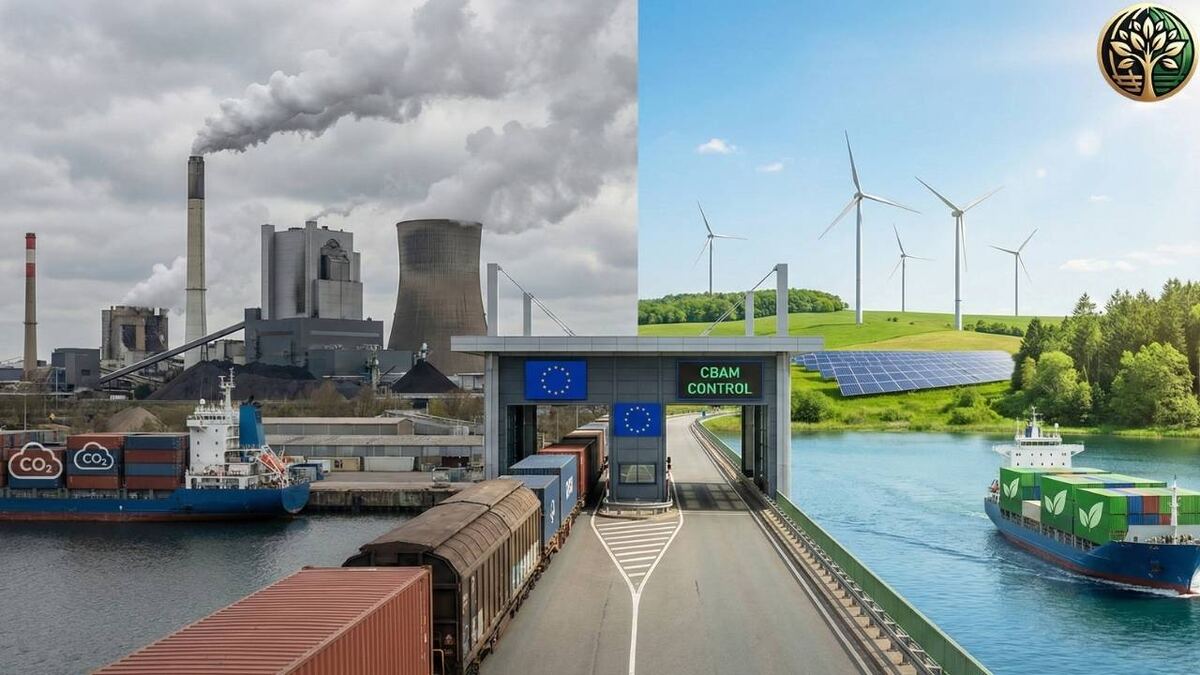
CBAM (Carbon Border Adjustment Mechanism), is a trade and environmental regulation developed by the European Union to prevent carbon leakage.
The basic logic of the mechanism is as follows: producers within the EU pay a certain fee for carbon emissions under the EU Emissions Trading System (EU ETS). To prevent its own producers from facing unfair competition and to encourage global emission reductions, the EU also imposes a 'carbon tax' or 'emission charge' on carbon-intensive products imported from outside the Union when they enter the EU. In other words, in order to sell your product to the EU, you must pay for the carbon you emitted during production (if you did not pay for it in your own country) at the EU border.
What is CBAM and what are its implications for companies?
CBAM is not just a customs duty for companies, but a strategic transformation that requires the redesign of all production and supply processes.
1. Which Sectors Are Covered?
In the first phase, the focus is on sectors with high carbon intensity and the highest risk of carbon leakage:
- Iron and Steel
- Cement
- Aluminium
- Fertilisers
- Electricity
- Hydrogen
If your company directly exports these products to the EU or is part of a supply chain that processes these products and supplies them to the EU market, CBAM directly affects you. In the coming years, this scope is expected to expand to include other sectors such as textiles, chemicals and plastics.
2. Reporting and Cost Obligations
During the transition period (October 2023 - December 2025), companies were only required to report the embedded emissions of their products to the EU. However, the financial obligation period began in 2026.
Companies are now required to purchase CBAM certificates in exchange for the emissions they declare. Companies that do not reduce their carbon footprint will face significant costs when entering the EU market and will lose their competitive advantage.
CBAM and Global Climate Strategy: Prepare with the Green Gold Foundation
CBAM sends a very clear message to companies that they must decarbonise their production processes. However, corporate sustainability is not just about avoiding paying taxes at the EU border. Investors, stakeholders and global regulators are looking at your company's overall 'Net Zero' strategy.
While reducing your production process emissions (Scope 1 and 2) through technological investments, offsetting your residual emissions that cannot be eliminated with projects that meet international standards is the most reliable way to improve your corporate ESG (Environmental, Social, Governance) score.
This is precisely where our mission at the Green Gold Foundation comes into play. With our mega REDD+ project protecting 1 million hectares of forest in the Nord-Ubangi region of the Democratic Republic of Congo:
- We prevent global carbon emissions on a massive scale by reducing deforestation by 30% annually.
- We support your company's value chain-wide climate actions (BVCM) with verified, transparent, and high-quality carbon credits.
- We add strong social impact to your climate action by empowering local communities through education and sustainable agriculture practices.
While regulations like CBAM focus on product-based emissions, you can strengthen your company's global reputation and climate leadership by participating in Green Gold Foundation programmes such as Green Gold Wings, Wheels, and Stay.
What is CBAM? Topic Summary for Companies
What is CBAM?: It is the European Union's 'Carbon Border Adjustment Mechanism,' which taxes the carbon content of imported products to prevent carbon leakage and encourage producers outside the EU to transition to green practices.
What is CBAM and why is it important for companies? This system, which will come into effect in 2026, requires companies exporting iron, steel, aluminium, cement, fertiliser and hydrogen to purchase a 'CBAM Certificate' at the EU border equivalent to the amount of embedded carbon in their products. Companies with a high carbon footprint will see their costs increase and their competitiveness decline in the EU market.
How to Comply: Companies must transparently calculate and reduce emissions from their production processes.
The Role of the Green Gold Foundation: In the global green transition initiated by CBAM, companies must balance not only their product-based carbon footprint but also their overall corporate carbon footprint. The Green Gold Foundation offers companies nature-based, high-quality carbon offsetting (carbon credits) and the opportunity to achieve ESG (Environmental, Social and Governance) targets through REDD+ projects that protect 1 million hectares of forest in the Congo Basin.
Frequently Asked Questions (FAQ)
1. Can voluntary carbon credits (e.g., credits from REDD+ projects) be used to pay CBAM taxes?
No. To fulfil CBAM obligations, it is necessary to purchase 'CBAM Certificates' specifically issued by the Union. However, voluntary carbon credits obtained from reputable institutions such as the Green Gold Foundation are critical for offsetting your company's overall corporate carbon footprint (Net Zero targets), improving your sustainability reporting scores (CDP, GRI), and meeting the requirements of green investors. Visionary companies that reduce their carbon footprint on a global scale are naturally better prepared for specific regulations such as CBAM.
2. What types of emissions are covered by CBAM?
At this stage, CBAM targets emissions directly released into the atmosphere during the production process (Scope 1) and indirect emissions resulting from the electricity consumed in the production of the product (Scope 2).
3. If my company pays a carbon tax in its own country, will it have to pay again at the EU border?
If there is a national Emissions Trading System (ETS) or a carbon tax in the country where you produce (e.g. Turkey) and this cost has already been paid during the production process, this amount can be deducted from the cost of the CBAM certificate required at the EU border.
4. How can the Green Gold Foundation support our corporate sustainability processes?
Creating a green brand image is vital for companies exporting to the European market. Through Carbon Credit Donations made via the Green Gold Foundation, you can offset your residual emissions that you have not yet managed to eliminate operationally through nature-based projects, adding a social development dimension (supporting local communities in Congo) to your climate action.
As a new era begins in international trade, would you like to measure your company's environmental impact and draw up a sustainability roadmap that meets global standards? Join the Climate Membership and be a pioneer of change with the Green Gold Foundation.